Target audience
The specific group the product is built and marketed for first.
The target audience is the group that cares most about what the product does best. Choosing one narrows the work and sharpens every message. Trying to appeal to everyone at once usually means appealing strongly to no one.
Why it matters for a product engineer
A target audience makes every decision smaller. Which platform first, which integration, which default, which words on the first screen: each one is easier when you know who it is for. A product for everyone has to be good at everything, and a small team cannot build that.
How to do it
- Start from what the product does best, and find the people who care most about that.
- Describe them by situation and need, not only demographics. See user segments.
- Check that you can reach them: where they read, search and buy.
- Choose one group first. You can add others later, from a position of strength.
- Write it in one sentence and use it to say no to features, channels and copy.
- Check it against real users every few months: who stays, who pays, who recommends you.
Common mistakes
- “Everyone who…”, which is not a choice.
- Choosing the biggest group instead of the one that needs you most.
- An audience you cannot reach with your channels.
- A target audience on the strategy slide and a different one on the home page.
Example
Mamitsu is for developers of apps and agents, and its home page says so in one line. Inside that group, Unai Esteibar chose a first niche: marketing teams that check whether sponsored videos really mention their brand. RelievApp chose people who want what meditation gives but cannot sit still with it, most of all when they are anxious. (Mamitsu, RelievApp)




Mamitsu's home page: a link and a question in, JSON out
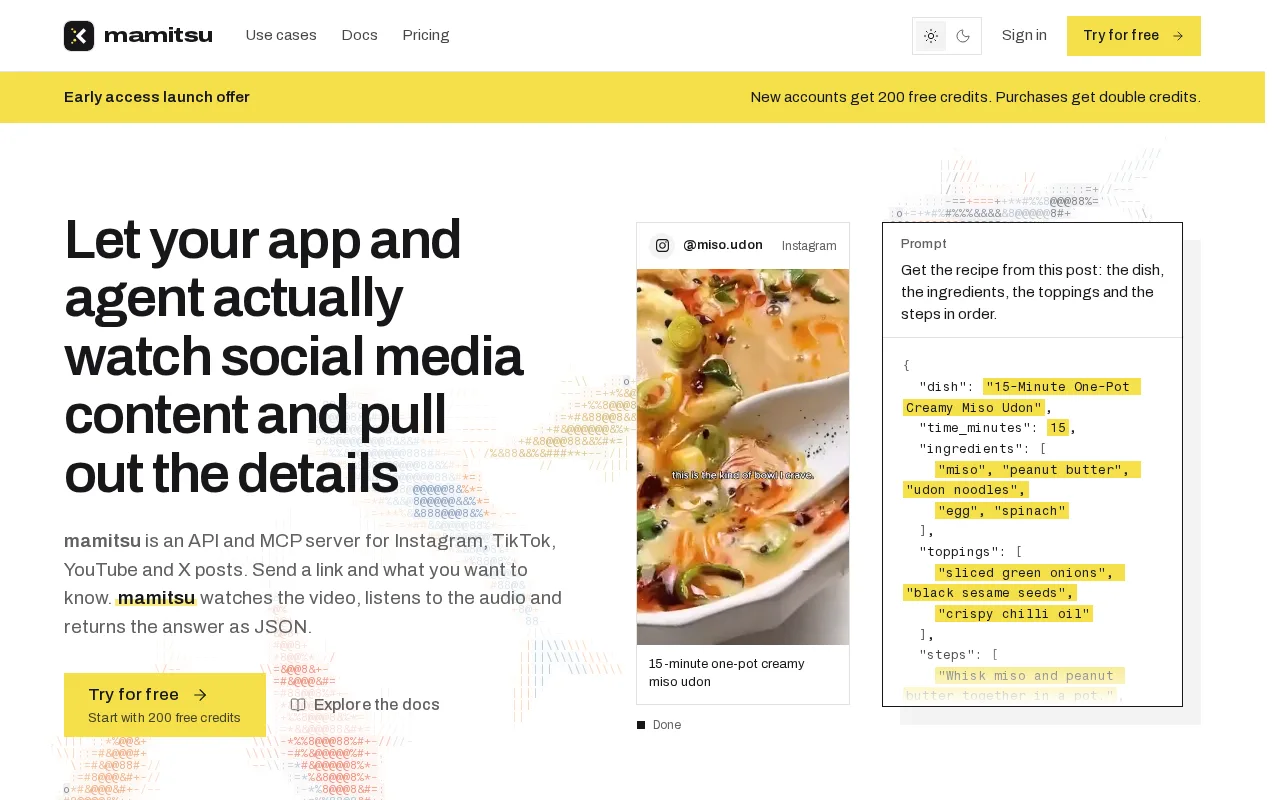
- 1Who it is for, in one line: apps and agents.
- 2The question is plain words. A JSON Schema is optional.
- 3ValueThe recipe comes back as fields an app can use.
The audience is on the first screen, and the example shows what that audience gets: data an app can use.
In practice
Real products- 18 Nov 2026RelievApp, Part I: is it a meditation app?
Resources
2- articleStart here
An introduction to positioning ↗
April Dunford · 2020 · 5 minThe five parts of positioning, starting from the alternatives customers would use if you did not exist.
- articleStart hereApril Dunford · 2017 · 7 min
A startup story where changing the frame around the same product changed its results.